Roman Bronze Double Handle Situla - Art for Eternity
Roman Bronze Double Handle Situla
Roman Bronze Double Handle Situla - Art for Eternity
Roman Bronze Double Handle Situla

Roman Bronze Double Handle Situla

15770

Regular price$6,500.00
/
Shipping calculated at checkout.

This site is protected by hCaptcha and the hCaptcha Privacy Policy and Terms of Service apply.

Roman Imperial, Ca. 1st–2nd Century AD

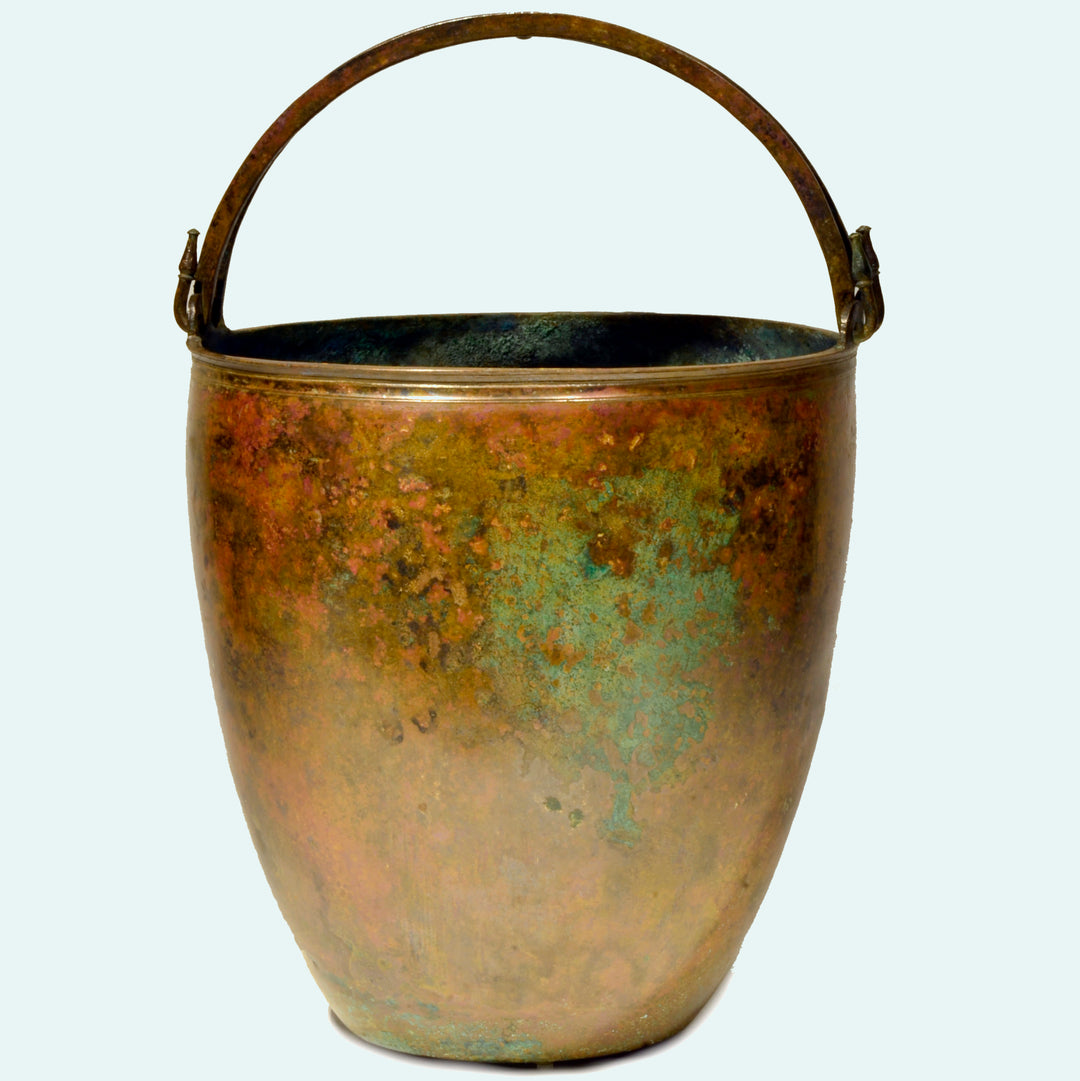
A finely raised hammered bronze deep-bodied situla, an ancient bucket-shaped vessel, with an ovoid/bell-shaped body tapering to a rounded base and an out-turned rim with wheel-cut decorative grooves below the lip. The arched swing handle is separately cast and terminates in palmette-form attachments that loop through cast lugs at the rim, allowing the handle to pivot upward. The exterior retains a fine reddish-brown patina with cuprite and green malachite zones, and the interior shows the deep green burial patina characteristic of ancient excavated bronze.

Condition: One loop end of the handle missing; otherwise intact

Size: 9-3/4 in. H × 9 in. W (24.8 cm × 22.9 cm); 15 in. (38.1 cm) with handle raised

A situla (Latin for "bucket" or "pail") is the archaeological term for an elaborate bucket-shaped vessel, used across antiquity in domestic, military, and ceremonial contexts to carry, store, and serve liquids. In the Greek and Roman world, bronze situlae frequently formed part of wine-service sets, the situla holding wine, served with ladles, strainers, and cups, and were valued items of the elite table and the symposium. The swing-handle design, pivoting from two cast lug attachments, is the standard construction for the type.

The palmette motif on the handle attachments has a long pedigree on Greek and Roman bronze situlae, traced through the scholarship from 4th-century BC ovoid situlae onward. Cast siren-, mask-, or palmette-form attachments are the most common handle terminals on surviving examples.

Comparison (cf.): Roman bronze situlae with swing handles and cast palmette/floral attachments in the British Museum (G.1883-1112-1), Cleveland Museum of Art, and the Metropolitan Museum

Provenance: H. H. Heissmeyer collection, Schwäbisch Hall; acquired 1999 from Jürgen Haering – Galerie am Museum, Freiburg; previously German private collection, acquired 1970s–80s


All pieces are unconditionally guaranteed authentic and as described in perpetuity and have been legally acquired and imported in full accordance with U.S. and applicable foreign regulations regarding the movement and sale of antiquities.

A signed guarantee of authenticity with a description and photograph of the item(s) accompanies this object.

We ship Tuesday to Friday with UPS or USPS and usually same day if your order is received before 2pm. Depending on size and destination, delivery times range from one to five business days.

For overseas shipments our shipping charge includes packing, preparation of all customs paperwork, insurance and carrier fees in compliance with all USA and International customs requirements.

Overseas shipments are usually sent by courier but contact us if you have a shipping preference. International customers are responsible for all duties and taxes. 

You may also like


Recently viewed