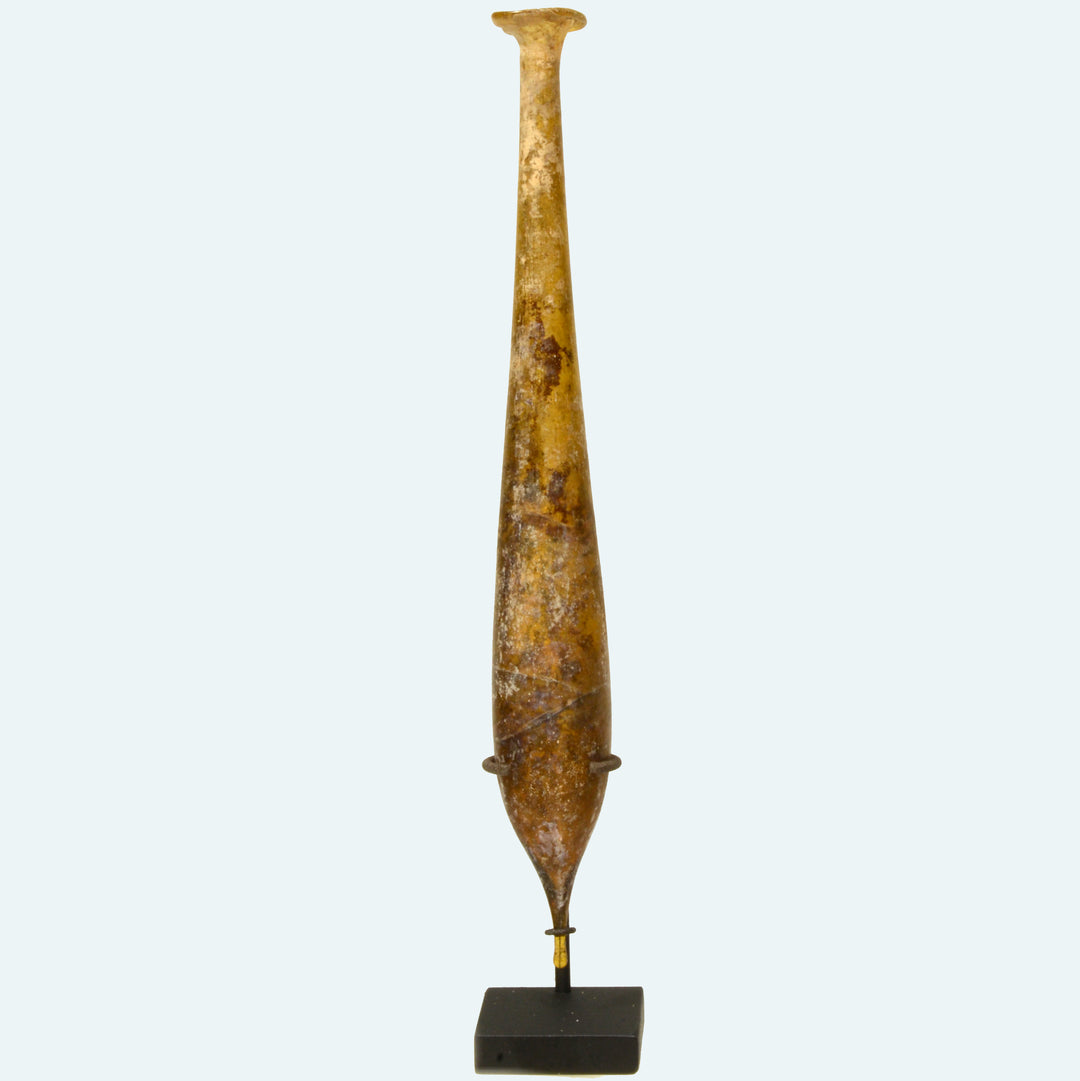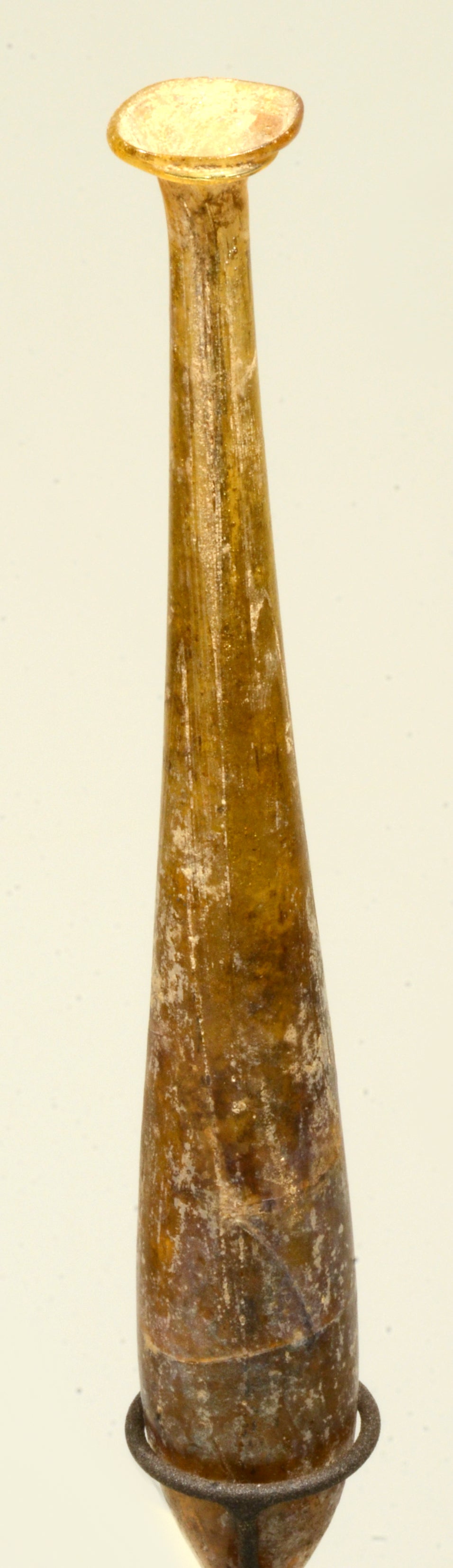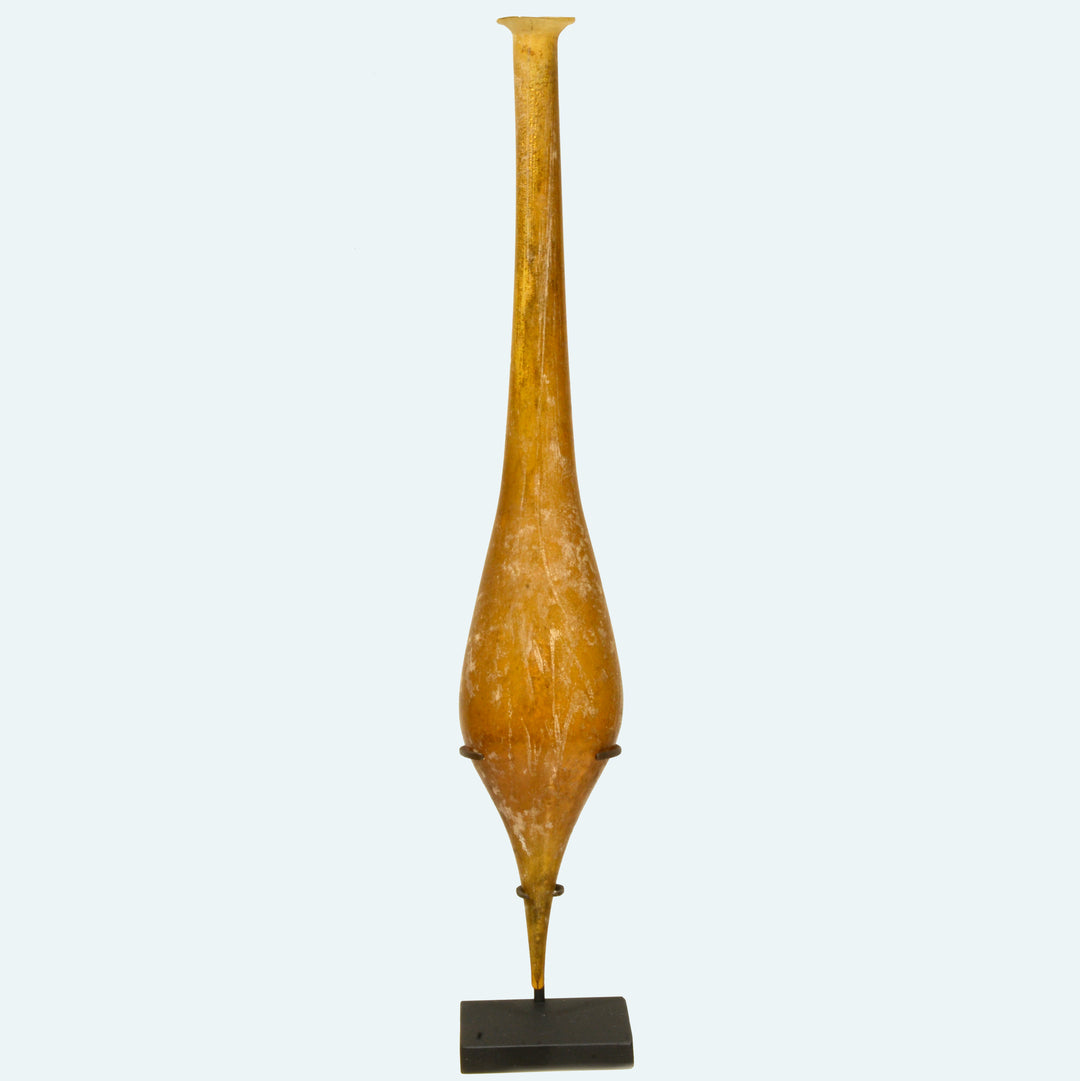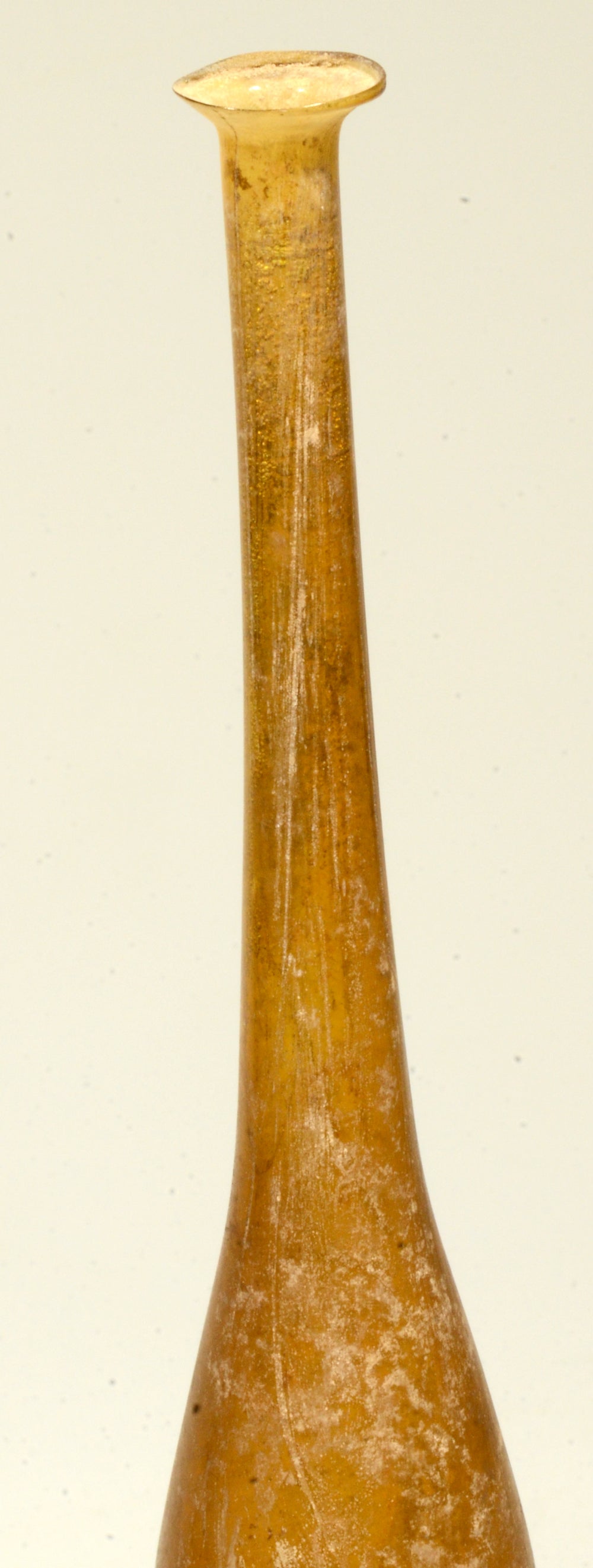





Authentic Roman glass, 1st to 5th century AD: perfume bottles, cosmetic tubes, beakers and bowls.
Glass became an everyday material under Rome. Around the middle of the 1st century BC, workshops on the Syro-Palestinian coast learned to inflate molten glass on the end of a tube. Before that, vessels were cast or built up around a core, slowly and at a cost. Blowing made them quick to produce, and within a few generations glass was in use across the empire for the table, for storage and for the dressing table.
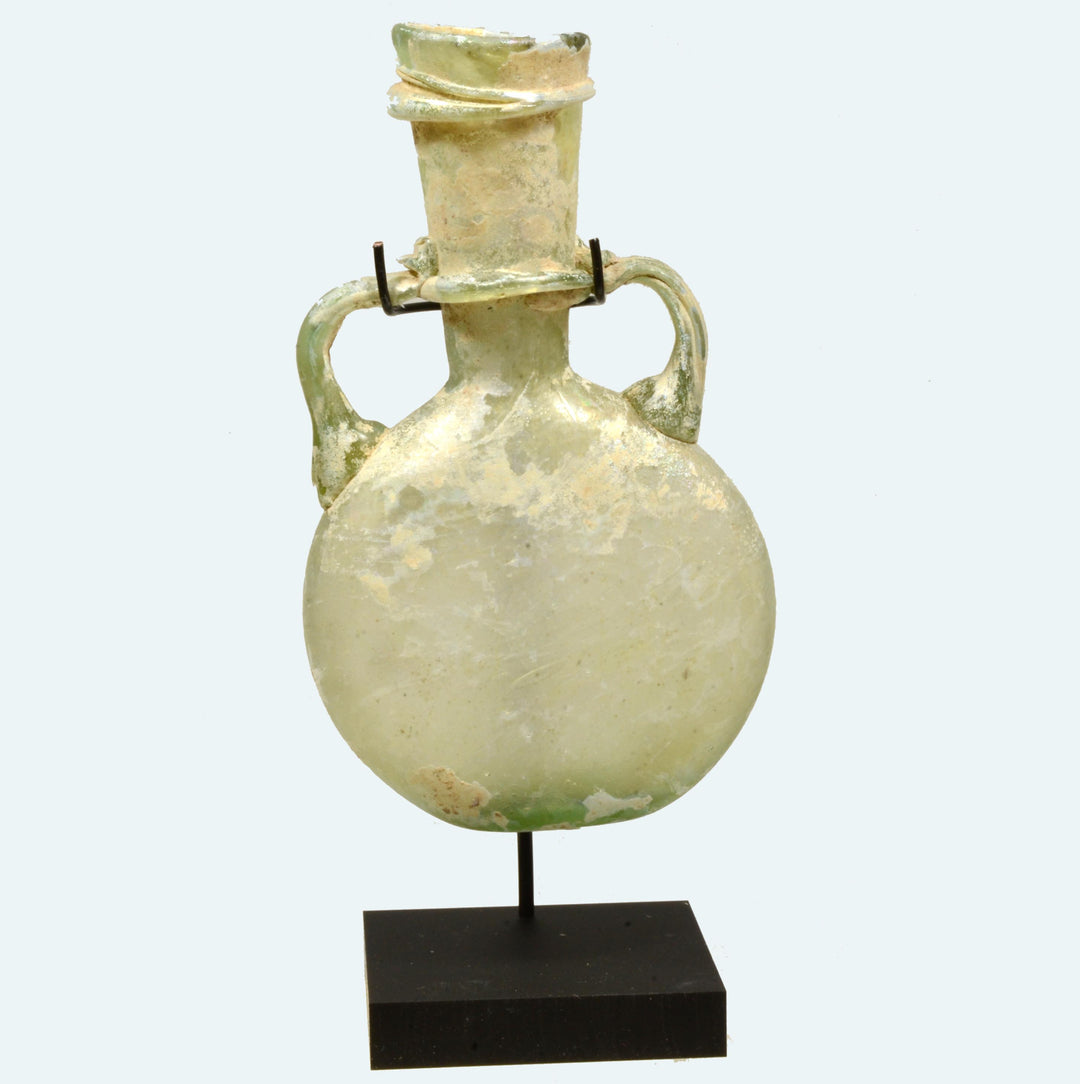
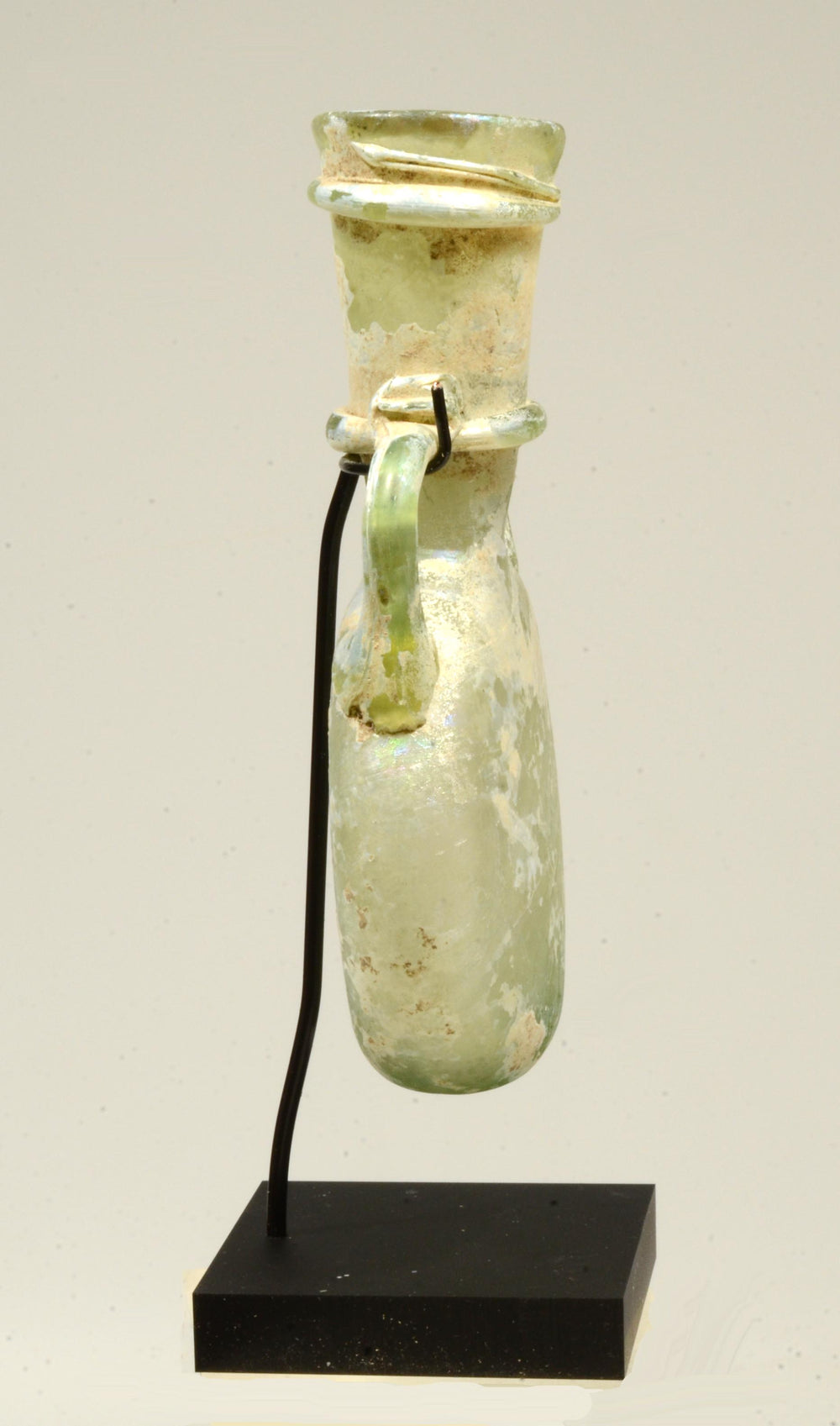
The commonest survivals are unguentaria, the small bottles that held perfume and scented oil. Many were placed in graves, which is why so many are intact. Alongside them are amphoriskoi, beakers, bowls and the double-tube cosmetic bottles made in the eastern Mediterranean in the 4th and 5th centuries, which held kohl for the eyes.
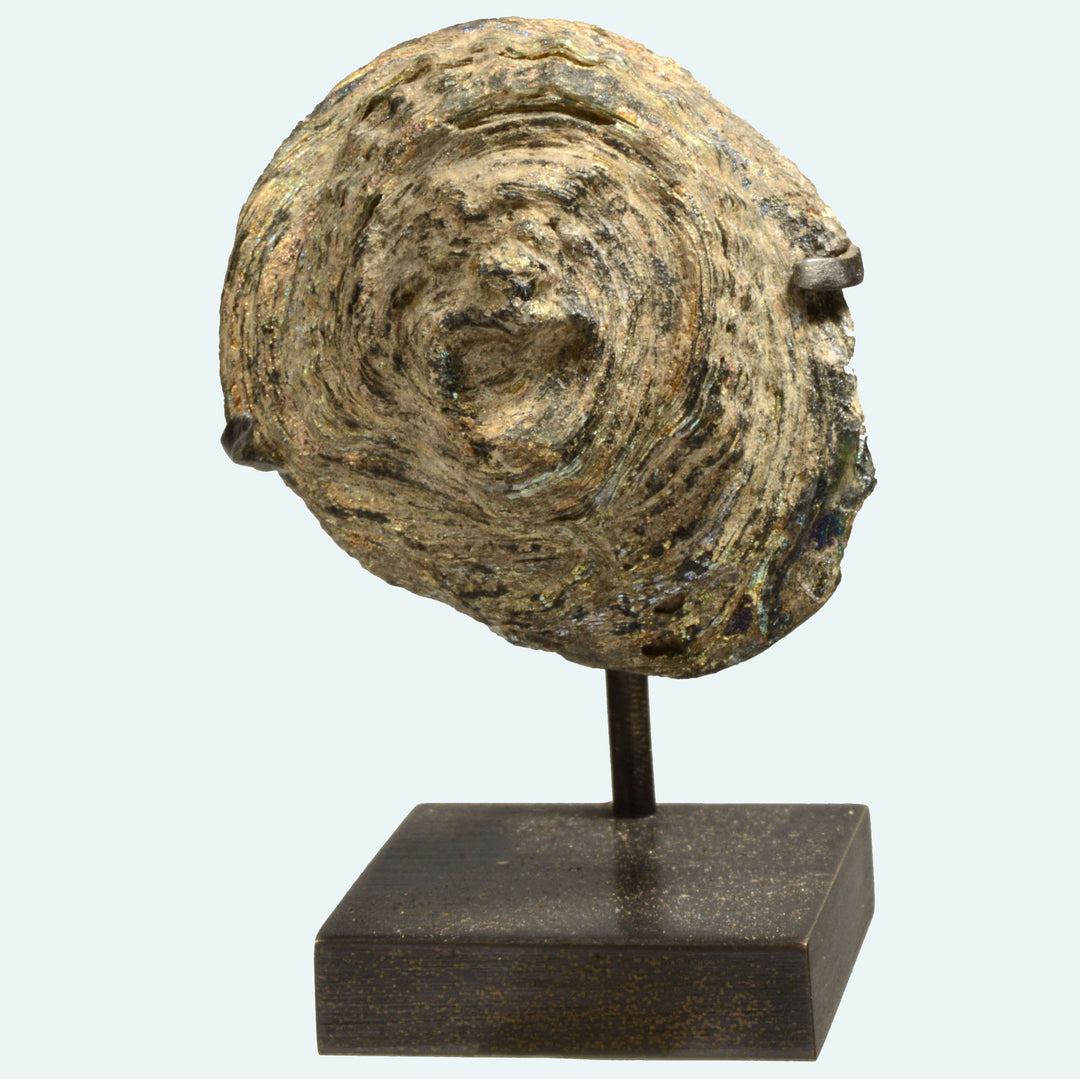
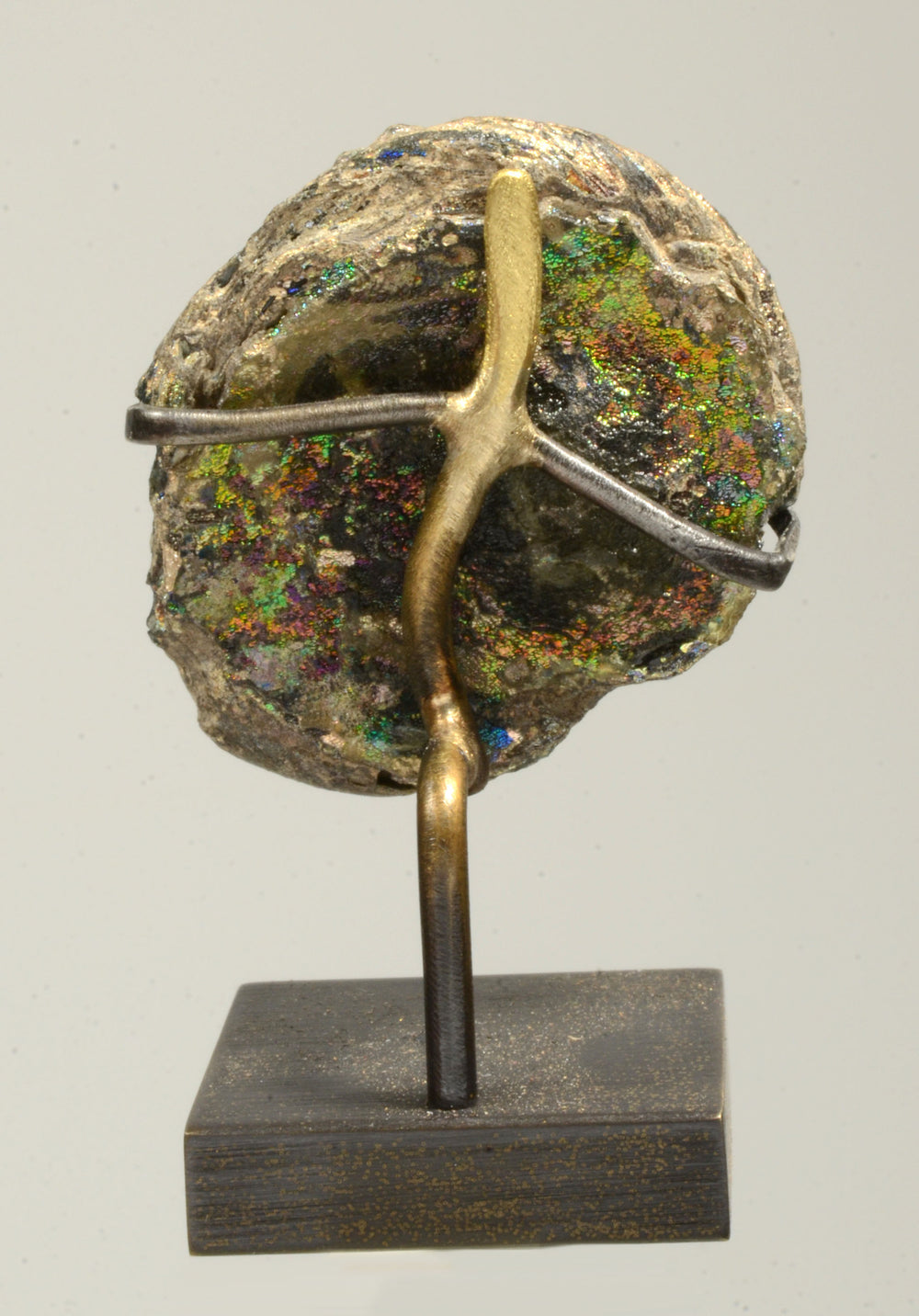
The natural color of Roman glass is a pale blue-green, the result of iron in the sand. Amber, aubergine and cobalt blue were made by adding minerals to the batch. The iridescence that collectors look for was no part of the maker's intention. It comes from centuries of burial, during which the surface weathers into thin layers that scatter light.
The glass offered here dates from the 1st to the 5th century AD. Each entry gives the form, color, date and condition, and provenance is stated where it is known. Every piece is guaranteed authentic and comes with a certificate of authenticity.