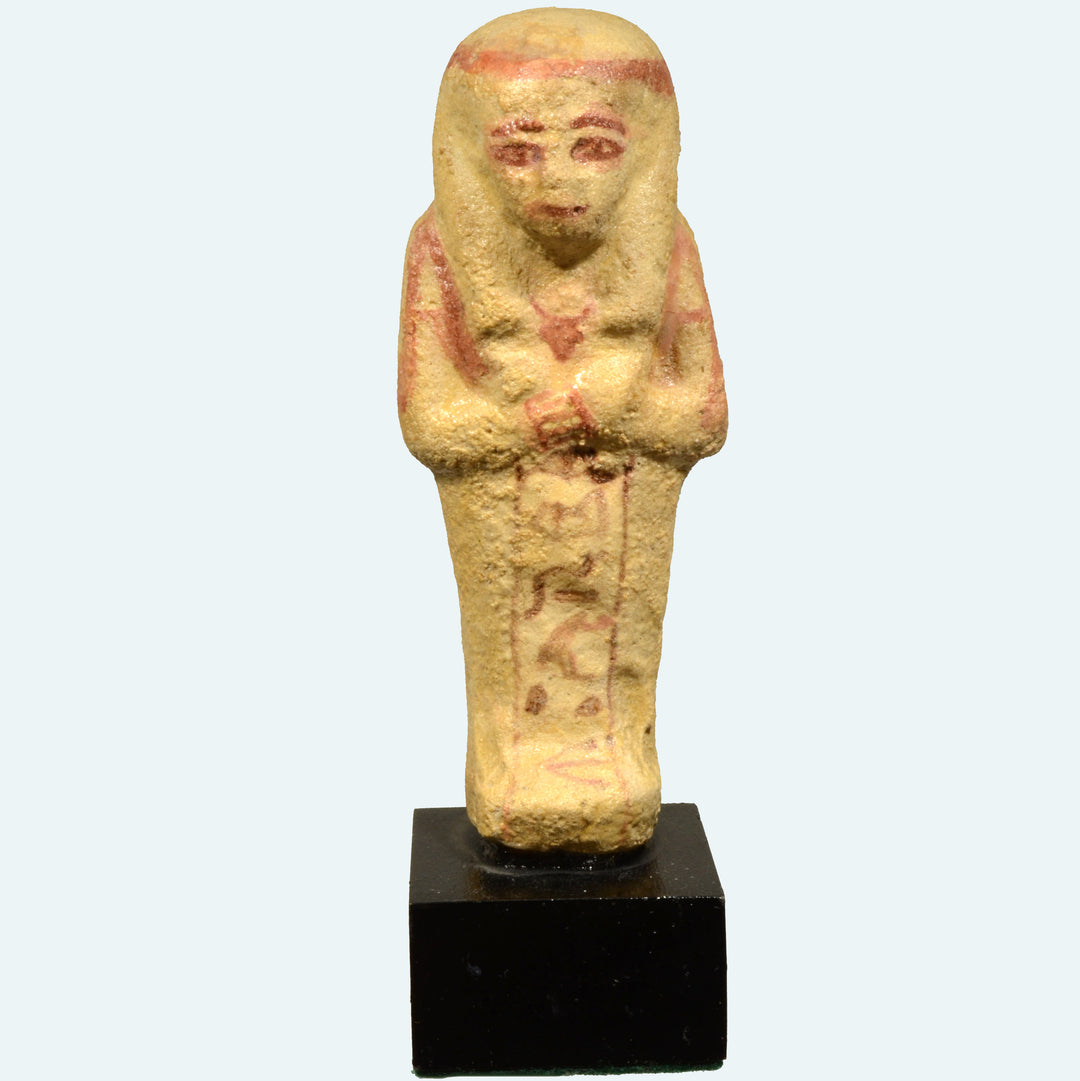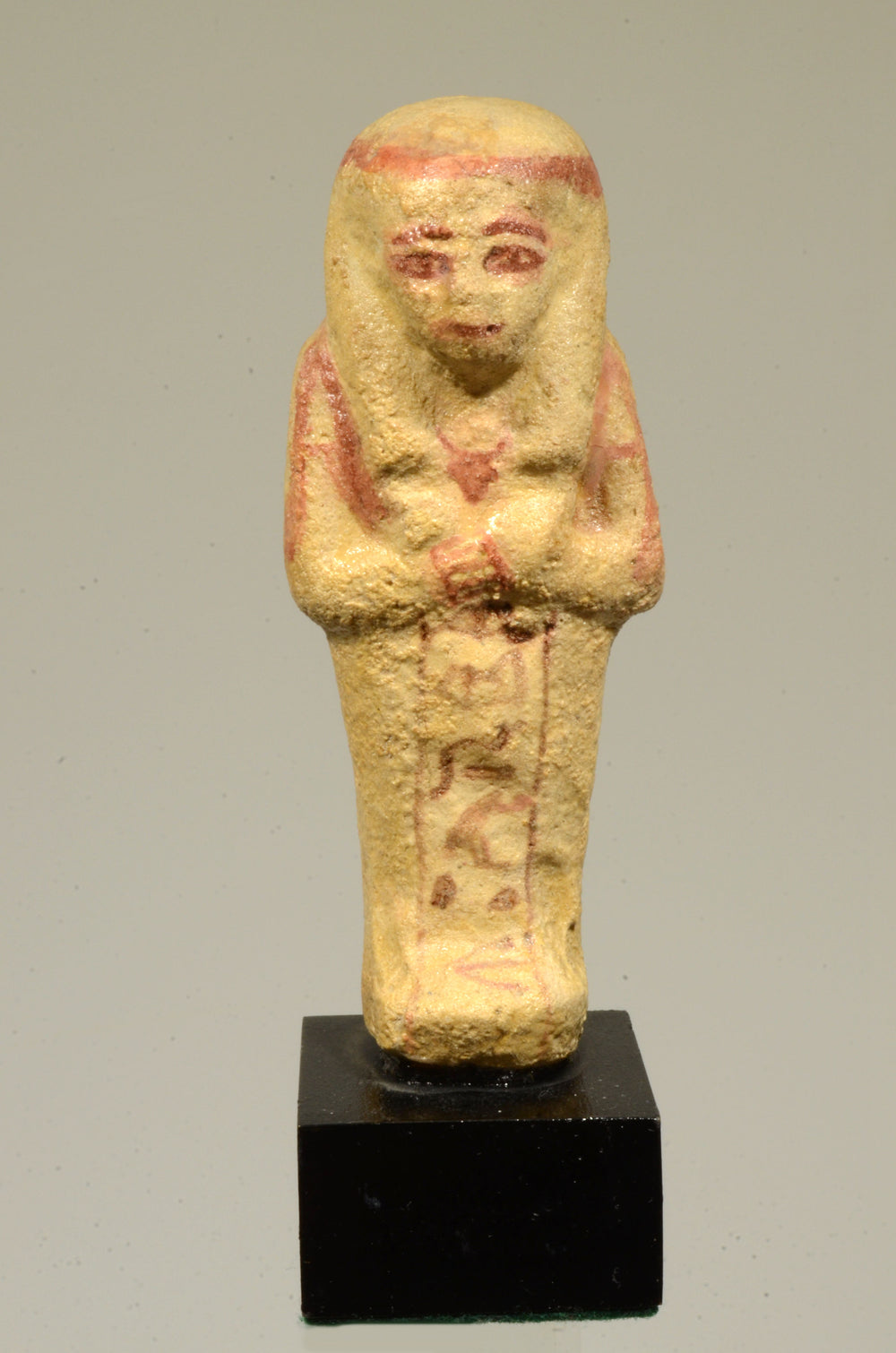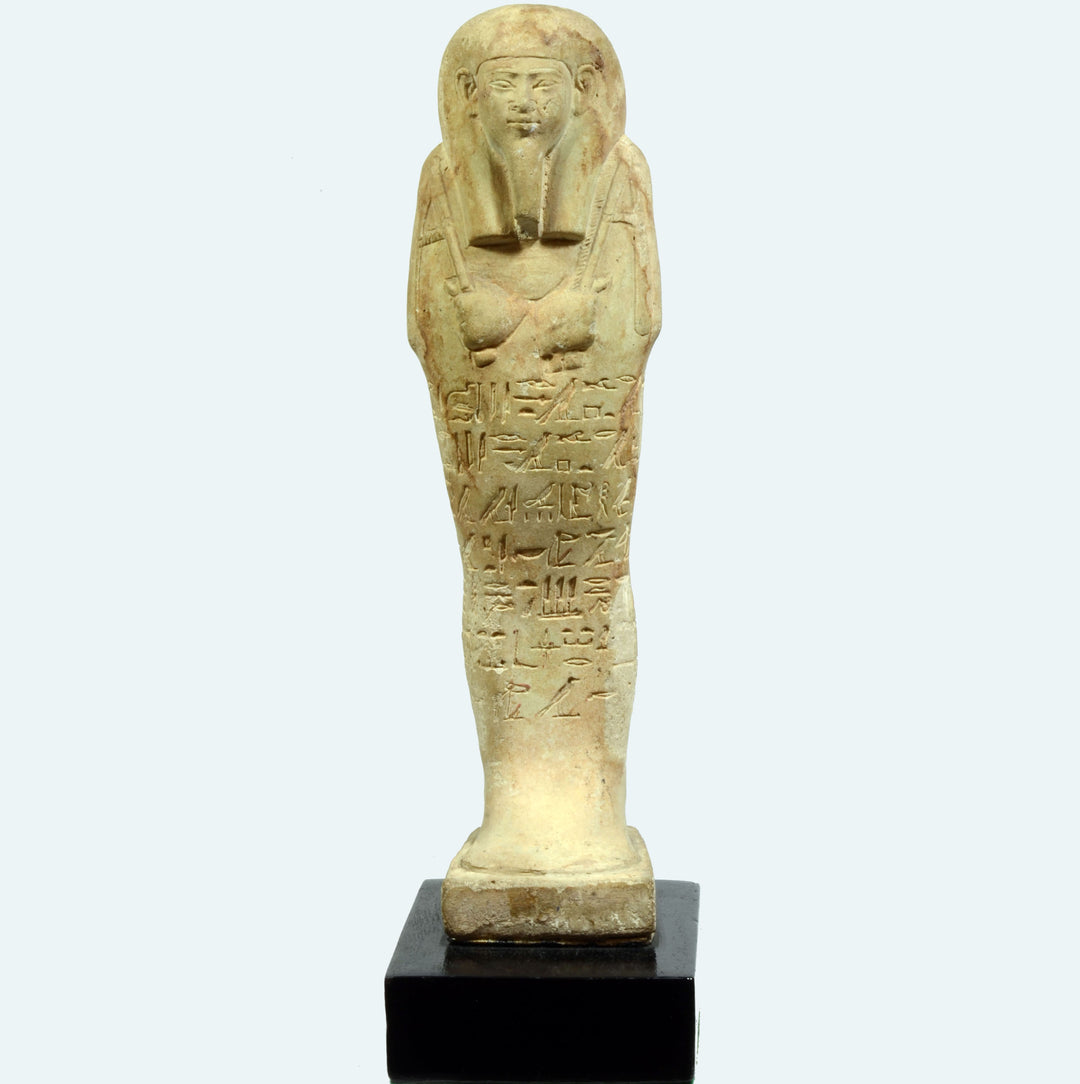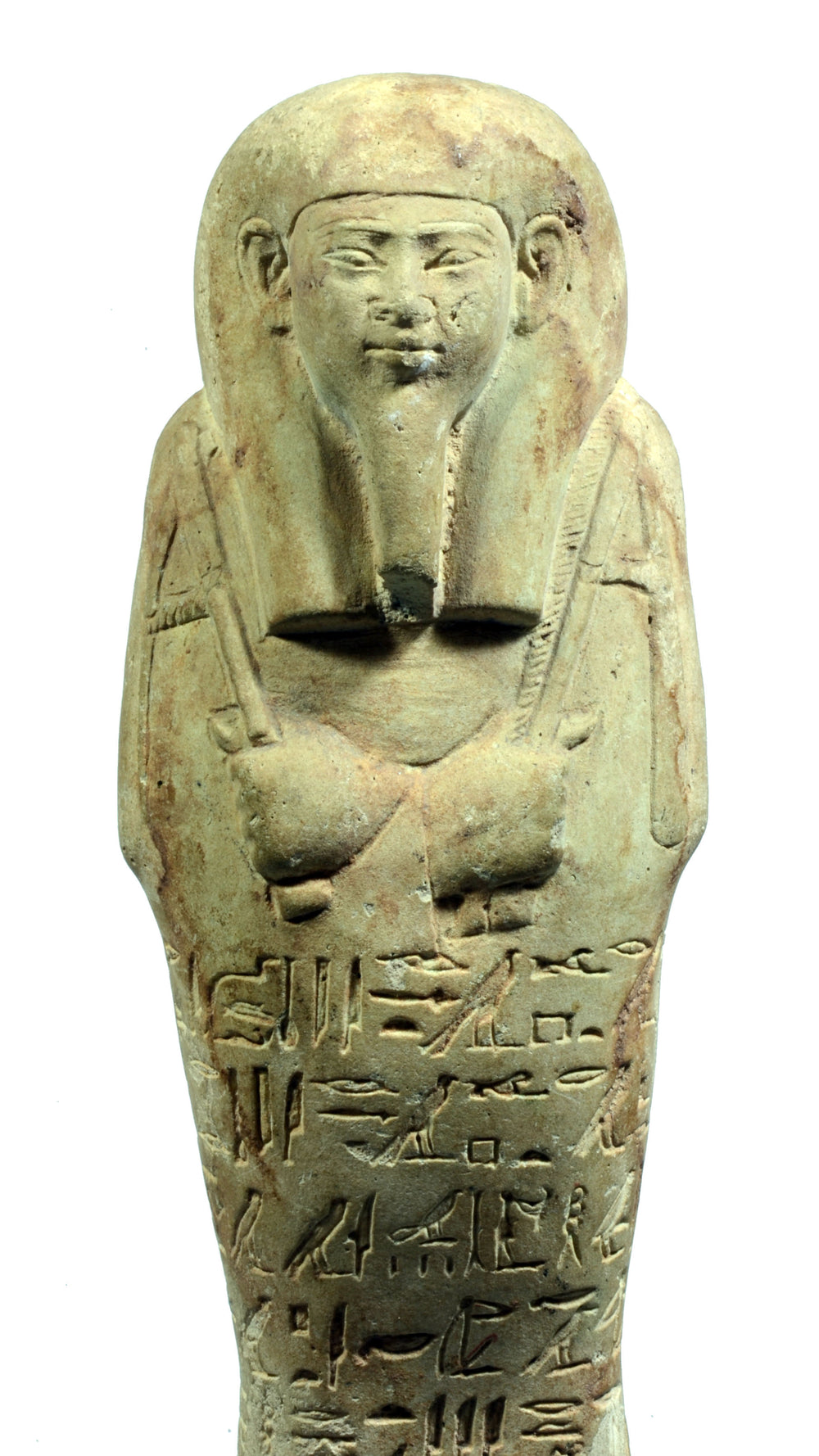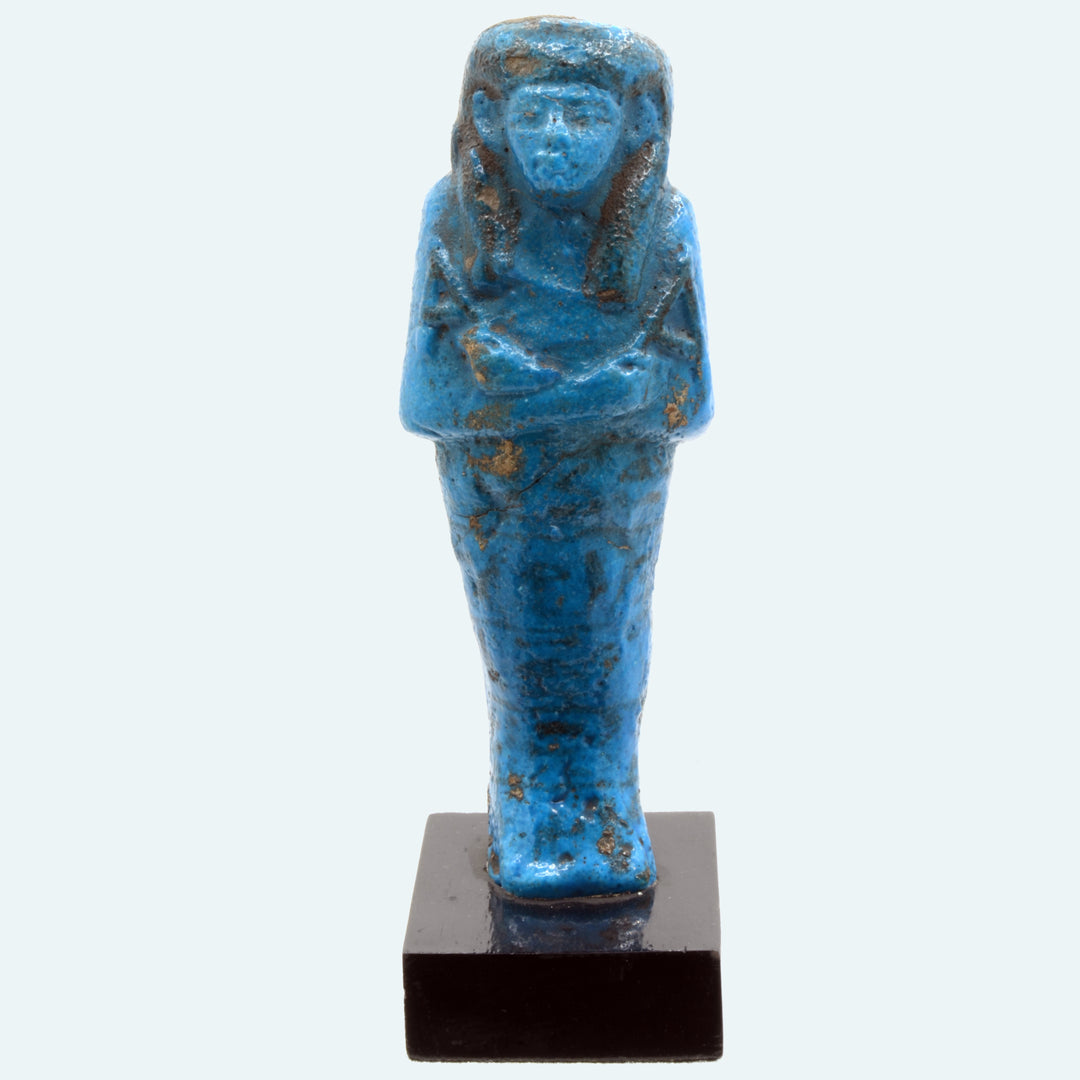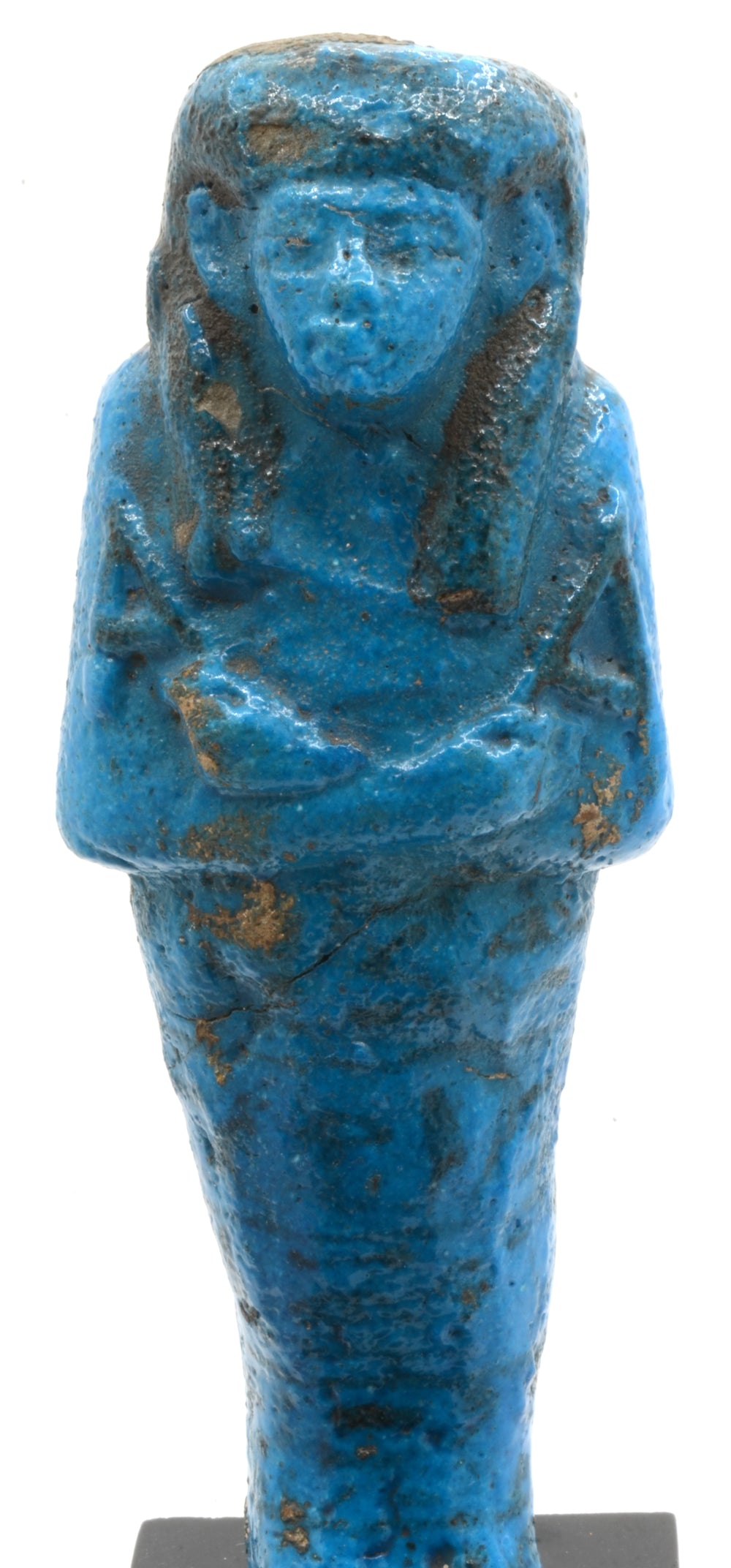




Authentic Egyptian ushabtis, New Kingdom to Ptolemaic Period, many inscribed for named owners.
Ushabtis are the small mummiform figures placed in Egyptian tombs to work in the afterlife on the owner's behalf. The name is usually taken to mean "answerer": when the deceased was called to labor in the fields of the next world, the figure was to answer in his or her place. The spell that sets this out, Chapter 6 of the Book of the Dead, is the text written on most inscribed examples.
The earliest figures date to the Middle Kingdom, when a burial held one or a few. By the Third Intermediate Period a full set could number 401: a worker for each day of the year and 36 overseers to manage them. Workers carry hoes and a seed bag. Overseers, called reis figures, wear a kilt and hold a whip.
Most ushabtis are faience, the glazed ceramic that Egyptian workshops fired in blues and greens. The deep blue figures with black painted detail belong largely to the Third Intermediate Period. The pale green ones with a back pillar and incised text are Late Period.
The ushabtis offered here range from the New Kingdom to the Ptolemaic Period. Several are inscribed for named owners, among them an overseer of the army and a chantress of Amun-Re, and where a figure carries text the entry gives the name and titles. Provenance is stated where it is known. Every piece is guaranteed authentic and comes with a certificate of authenticity.