Roman Imperial, Ca. 1st–2nd Century AD
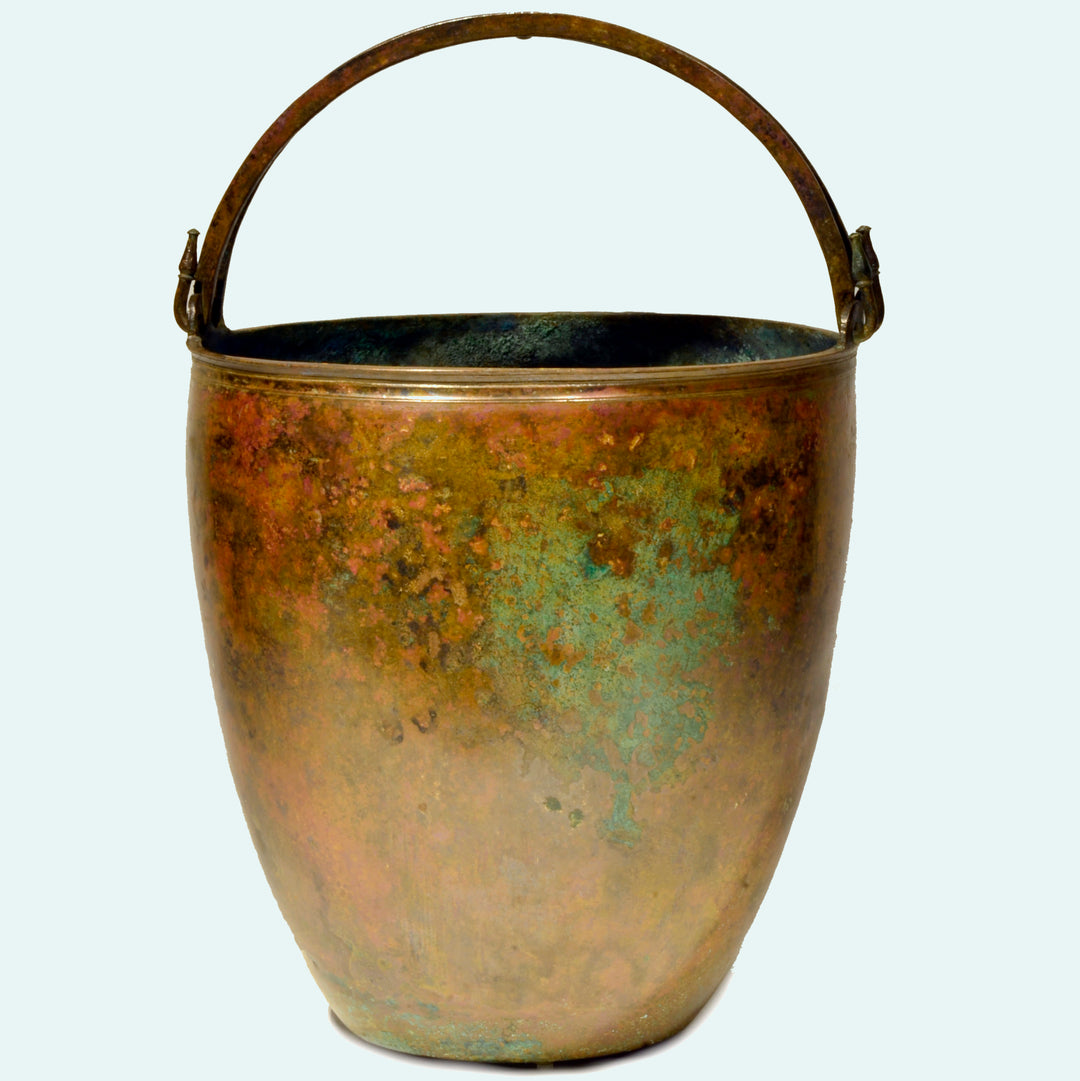
A finely raised hammered bronze deep-bodied situla, an ancient bucket-shaped vessel, with an ovoid/bell-shaped body tapering to a rounded base and an out-turned rim with wheel-cut decorative grooves below the lip. The arched swing handle is separately cast and terminates in palmette-form attachments that loop through cast lugs at the rim, allowing the handle to pivot upward. The exterior retains a fine reddish-brown patina with cuprite and green malachite zones, and the interior shows the deep green burial patina characteristic of ancient excavated bronze.
Condition: One loop end of the handle missing; otherwise intact
Size: 9-3/4 in. H × 9 in. W (24.8 cm × 22.9 cm); 15 in. (38.1 cm) with handle raised
A situla (Latin for "bucket" or "pail") is the archaeological term for an elaborate bucket-shaped vessel, used across antiquity in domestic, military, and ceremonial contexts to carry, store, and serve liquids. In the Greek and Roman world, bronze situlae frequently formed part of wine-service sets, the situla holding wine, served with ladles, strainers, and cups, and were valued items of the elite table and the symposium. The swing-handle design, pivoting from two cast lug attachments, is the standard construction for the type.
The palmette motif on the handle attachments has a long pedigree on Greek and Roman bronze situlae, traced through the scholarship from 4th-century BC ovoid situlae onward. Cast siren-, mask-, or palmette-form attachments are the most common handle terminals on surviving examples.
Comparison (cf.): Roman bronze situlae with swing handles and cast palmette/floral attachments in the British Museum (G.1883-1112-1), Cleveland Museum of Art, and the Metropolitan Museum
Provenance: H. H. Heissmeyer collection, Schwäbisch Hall; acquired 1999 from Jürgen Haering – Galerie am Museum, Freiburg; previously German private collection, acquired 1970s–80s